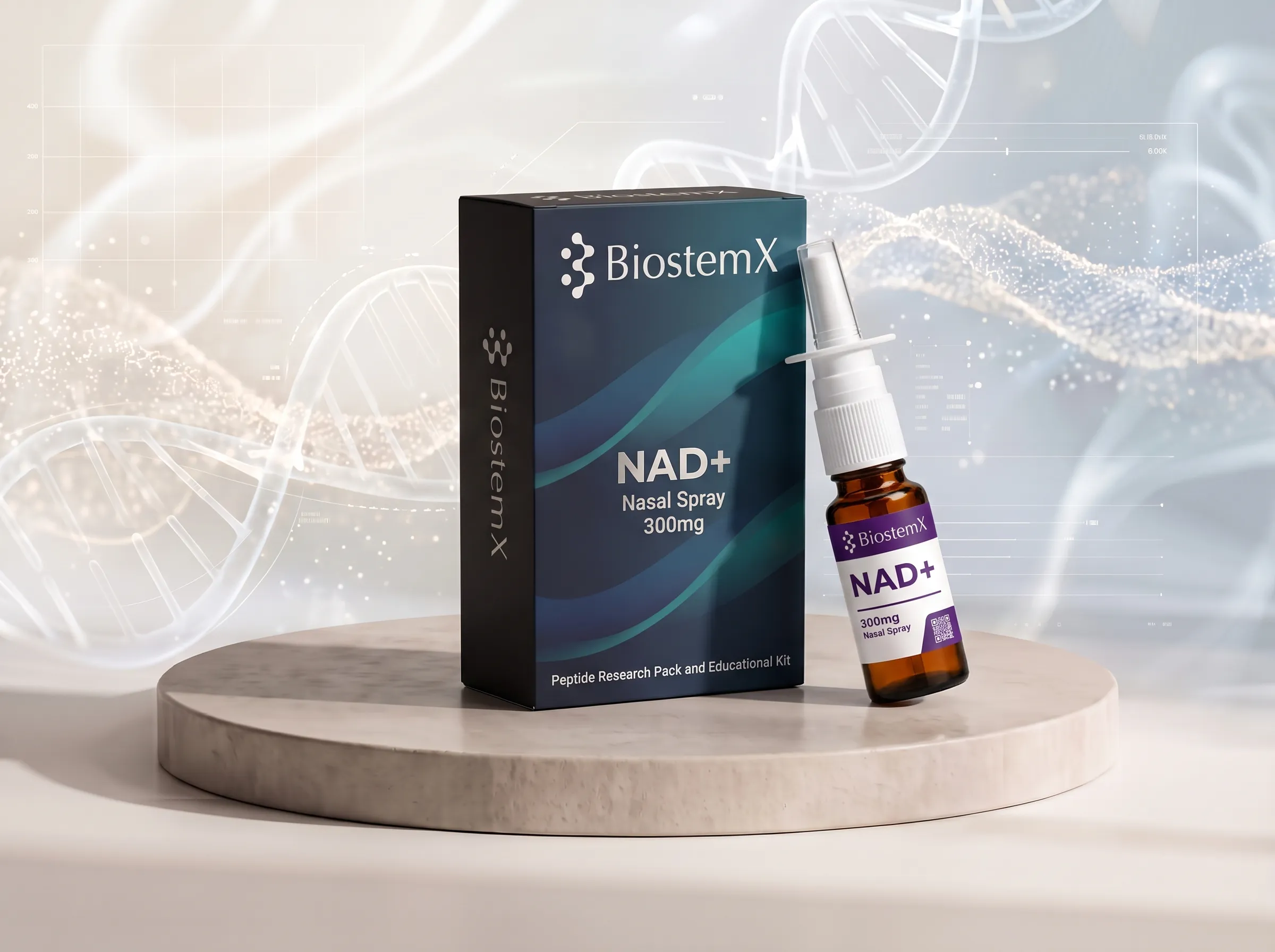
NAD+ 600

300mg

An essential coenzyme for over 500 enzymatic reactions, whose levels decline by 50%
between the ages of 40 and 60. Restores mitochondrial function, activates sirtuins, and
supports DNA repair, slowing the main molecular mechanisms of cellular aging. The 600
mg subcutaneous pen delivers 200 mg/ml over 3 ml, allowing 12 to 20 administrations for
longer cycles or higher doses per session.

196 $

About

What is NAD+?
NAD+ (Nicotinamide Adenine Dinucleotide) is an essential coenzyme discovered in 1906
by Arthur Harden, present in every living cell and involved in over 500 enzymatic reactions.
It plays a central role in transferring energy from nutrients to cellular processes, in DNA
synthesis and repair, in the regulation of circadian rhythm, and in the modulation of the
immune response.
NAD+ levels physiologically decline by 50% between the ages of 40 and 60, representing
one of the main molecular drivers of cellular aging. This progressive depletion
compromises mitochondrial function, reduces DNA repair capacity, and weakens the
response of sirtuins (SIRT1-7), the main epigenetic regulators of longevity. Exogenous
administration of NAD+ aims to restore these levels, reactivating the metabolic and repair
pathways that decline with age.
PRCN LAB offers NAD+ in three distinct formats designed for different needs and
protocols: the 300 mg subcutaneous pen, the 600 mg subcutaneous pen, and the 500 mg
lyophilised format for intravenous infusion, which guarantees 100% bioavailability and is
indicated for intensive anti-aging programmes or metabolic resets.
The 600 mg pen is the higher-capacity subcutaneous format, concentrated at 200 mg/ml
over a total of 3 ml. It allows 12 to 20 administrations of 30 to 50 mg, extending availability
for longer cycles or slightly higher doses per session.

Administration and Dosage

NAD+ 300 mg PEN (subcutaneous)
Concentration: 100 mg/ml, total 3 ml, total 300 mg Frequency: daily Clicks per day: 10
Daily subcutaneous administration in fractioned doses of 30 to 50 mg per injection, 2 to 4
times per week. The 300 mg pen contains the total product for 6 to 10 administrations.
Standard cycle: 8 to 12 weeks, 4-week rest period. The pen dosage represents the total
content, not the single dose: always fractionate into 30 to 50 mg per injection.
NAD+ 600 mg PEN (subcutaneous)
Concentration: 200 mg/ml, total 3 ml, total 600 mg Frequency: daily Clicks per day: 5-10
Same protocol as the 300 mg pen, with extended availability for longer cycles or slightly
higher doses per session. The 600 mg pen allows 12 to 20 administrations of 30 to 50 mg.
Administer slowly to reduce flushing. Standard cycle: 8 to 12 weeks, 4-week rest period.
NAD+ 500 mg LIO (intravenous)
Concentration: lyophilised format for intravenous infusion Frequency: 1 to 2 times per
week
Maximum bioavailability (100% IV). Dose per session: 250 to 500 mg in mandatory slow
infusion of 2 to 4 hours. Frequency: 1 to 2 times per week. Cycle: 4 to 8 sessions, then
monthly maintenance. Requires qualified healthcare personnel. Rapid infusion can cause
severe flushing and chest cramps: slow infusion speed is a non-negotiable safety
requirement

Clinical Trials and Results

NAD+ boasts one of the most extensive scientific literatures among molecules of interest in
anti-aging medicine, with studies covering various therapeutic areas from neurology to
oncology, from metabolism to longevity.
Clinical trials conducted on diabetic patients have demonstrated that NAD+ therapy
improves metabolic function and reduces systemic inflammation, with documented
improvements in glycaemic and lipid parameters. In a further trial on subjects with mild
cognitive impairment, NAD+ administration produced significant improvements in
cognitive functions, suggesting a direct neuroprotective role mediated by the activation of
cerebral sirtuins.
Specific studies on mitochondrial function have demonstrated that restoring NAD+ levels
increases both the number and efficiency of mitochondria in cells, with documented antiaging effects at the molecular level. Ongoing research focuses on the potential of NAD+ in
neurodegenerative diseases such as Parkinson’s and Alzheimer’s, in integrative oncological
support, and in the prevention of age-related metabolic diseases, with promising
preliminary results across all these areas.

Possible Side Effects

• Flushing (redness) dose-dependent, more pronounced with the intravenous route if
infusion is too rapid
• Nausea if administered too rapidly intravenously or at excessive subcutaneous
doses
• Mild headache during the first administrations, generally transient
• Chest cramps in case of excessively rapid IV infusion: preventable with mandatory
slow infusion
• Occasional diarrhoea at high doses
NAD+ is a molecule naturally present in the body with an excellent safety profile. Side
effects are almost exclusively dose-related and preventable with correct titration and
appropriate administration technique

Peptide Combinations

• Epitalon: Reference longevity stack. Epitalon activates telomerase and regulates
circadian rhythm, while NAD+ restores coenzyme levels and activates sirtuins.
Together they cover two of the main molecular mechanisms of cellular aging.
• MOTS-c: Mitochondrial and metabolic synergy. MOTS-c activates AMPK promoting
fat oxidation and mitochondrial biogenesis, amplifying NAD+’s action on
mitochondrial function in a complete longevity protocol.
• SS-31: Advanced mitochondrial stack. SS-31 acts directly on the inner
mitochondrial membrane reducing oxidative stress, while NAD+ optimises ATP
production. Together they represent a two-level mitochondrial protection protocol.
• 5-Amino 1MQ: Direct synergy on NAD+ levels. 5-Amino 1MQ inhibits NNMT
reducing NAD+ consumption, while exogenous supplementation restores its levels.
The combination optimises cellular coenzyme availability in a synergistic manner.
• GHK-Cu (Skin-Glow): Anti-aging skin stack. GHK-Cu stimulates collagen and
elastin production and promotes extracellular matrix remodelling, supporting
NAD+’s systemic anti-aging action with a cutaneous aesthetic and regenerative
component.
• Humanin: Mitochondrial triad. Humanin, MOTS-c, and NAD+ form the most
comprehensive mitochondrial anti-aging protocol available, covering protection
from oxidative stress, biogenesis, and energy availability.

Benefits

• Restoration of cellular NAD+ levels: Counteracts the progressive age-related
depletion, restoring the availability of the coenzyme needed for hundreds of
enzymatic reactions fundamental to cellular life.
• Sirtuin activation for DNA repair: Activates sirtuins (SIRT1-7), the main epigenetic
regulators of longevity, enhancing DNA repair mechanisms and slowing cellular
aging processes.
• Improvement of mitochondrial function: Supports and optimises mitochondrial
function, increasing the number and efficiency of mitochondria in cells, with
positive effects on ATP production and resistance to fatigue.
• Slowing of cellular aging: Acts on multiple hallmarks of aging simultaneously, from
telomere protection to reduction of oxidative stress, contributing to maintaining
cellular health over time.
• Metabolic support: Regulates glucose and lipid metabolism at the intracellular
level, improving energy efficiency and reducing the risk of age-related metabolic
diseases.
• Neurological protection: Improves neuronal resilience to oxidative stress and
supports cerebral energy metabolism, with potential applications in cognitive
support and prevention of neurodegenerative diseases.
• Circadian rhythm regulation: Participates in the regulation of the cellular
biological clock, with positive effects on sleep quality and the synchronisation of
metabolic processes.
• Antioxidant properties: Protects cells from oxidative stress and free radical
damage, preserving the integrity of DNA and cellular structures.
• Support for collagen synthesis: Influences the synthesis of collagen and elastin,
contributing to maintaining skin tone and elasticity and preventing visible signs of
aging.
• Athletic performance and recovery: Enhances mitochondrial energy production,
increasing physical endurance and reducing recovery times after training

Scroll to Top
✓ Item added to your cart!
View Cart Checkout