Prostamax

30mg

An organ-specific tetrapeptide bioregulator for prostate tissue, it reduces chronic
inflammation, improves urinary symptoms of BPH, and promotes glandular regeneration.
Cycles of 10 to 20 days, repeatable two to three times per year, with PSA monitoring.

196 $

About

What is Prostamax?
Prostamax is an organ-specific peptide bioregulator developed by the Russian scientific
school of Prof. Vladimir Khavinson, composed of a tetrapeptide sequence of four amino
acids: Lysine (Lys), Glutamic Acid (Glu), Aspartic Acid (Asp), and Proline (Pro). Like all
Khavinson bioregulators, it acts selectively on the target tissue — in this case the prostatic
glandular tissue — modulating gene expression at an organ-specific level and promoting
regeneration and functional rebalancing of the prostate gland.
The mechanism of action of Prostamax is based on the tetrapeptide’s ability to interact
directly with the DNA of prostatic cells, regulating the expression of genes involved in the
reduction of chronic inflammation, the regulation of cell proliferation, and restoration of
normal glandular function. This bioregulatory approach produces gradual but profound and
lasting effects on prostatic tissue, without interfering with other physiological axes.
Prostamax is particularly indicated in the management of benign prostatic hyperplasia
(BPH), reduction of chronic prostatic inflammation, and support of urinary function. The
classic Khavinson protocol involves short cycles of 10 to 20 days repeatable two to three
times per year, with regular PSA monitoring.

Administration and Dosage

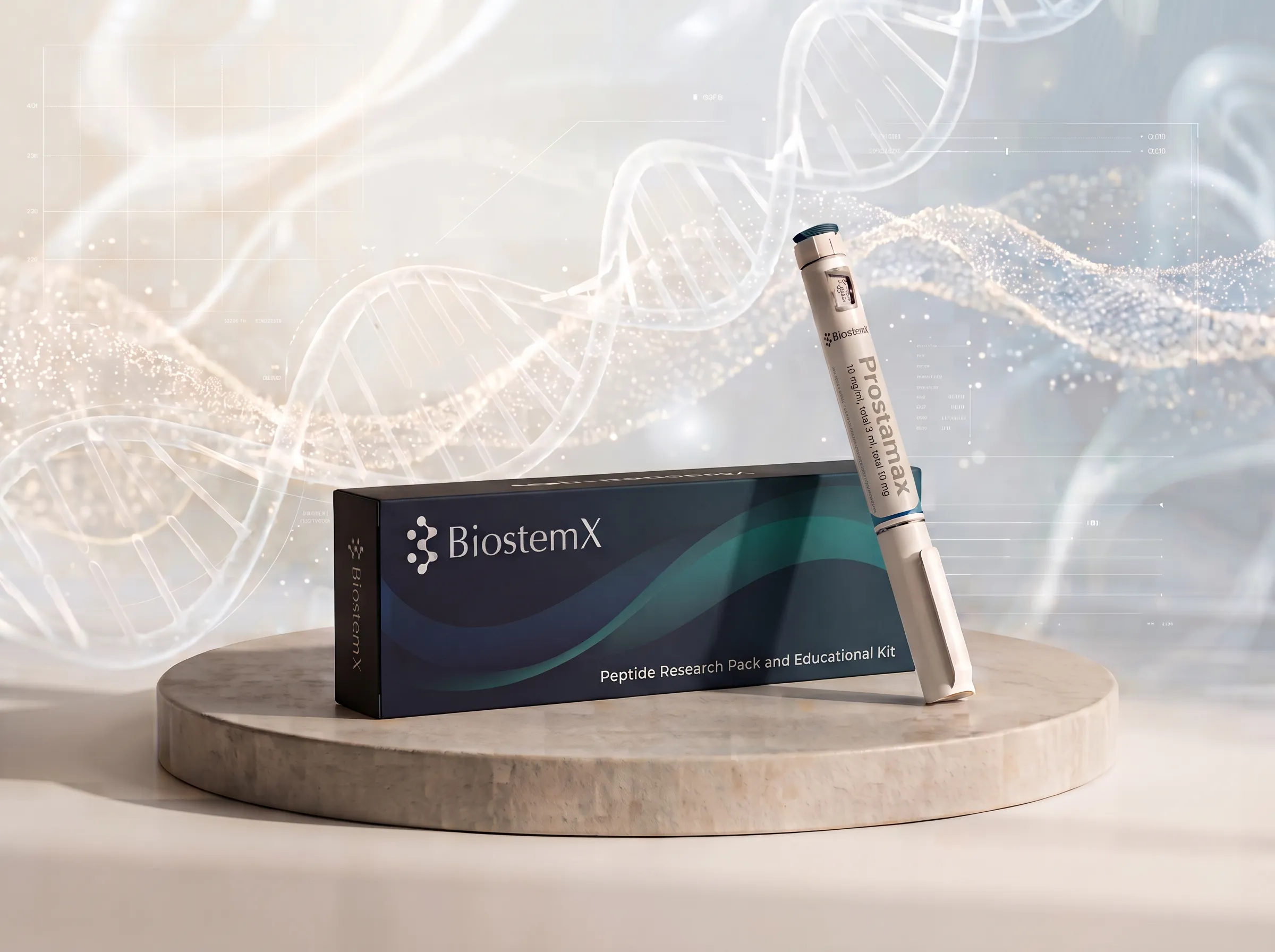
Concentration: 10 mg/ml, total 3 ml, total 30 mg Frequency: daily Clicks per day: 10
Daily subcutaneous administration for 10 to 20 consecutive days, repeatable two to three
times per year. Regular PSA monitoring during and after the cycle is recommended.
Rotation of injection sites (abdomen or anterior thigh) is advised at each administration.

Clinical Trials and Results

Prostamax is included among peptide bioregulators with documented clinical use within
the Russian scientific tradition, where it has been employed for decades in support of
prostate health and management of benign prostatic hyperplasia. Available data confirm
its efficacy in reducing chronic prostatic inflammation and improving related urinary
symptoms.
Studies conducted show significant improvements in urinary function parameters in
subjects with BPH, with a reduction in nocturia episodes and an improvement in urinary
flow. In patients with chronic prostatitis, Prostamax treatment demonstrated a reduction in
local inflammatory markers and an improvement in the overall symptom profile.
The excellent safety profile, confirmed by the absence of significant adverse effects in the
available clinical literature, and the brevity of the standard cycle make Prostamax a
practical and well-tolerated tool in male preventive and regenerative medicine protocols.
Regular PSA monitoring remains a fundamental recommendation during use.

Possible Side Effects

• Mild abdominal discomfort during the first administrations, generally transient and
self-limiting
• Possible initial fatigue in the early stages of the cycle, short-lived
Prostamax has an excellent tolerability profile. No significant adverse effects have been
documented in the available clinical literature, confirming the safety typical of Khavinson
school peptide bioregulators.

Peptide Combinations

• Thymalin: Synergy in systemic immune and regenerative support. Thymalin restores
thymic competence and modulates systemic inflammation, complementing
Prostamax’s organ-specific action on prostatic tissue.
• Epitalon: Complete male anti-aging stack. Epitalon acts on telomerase and
neuroendocrine regulation, while Prostamax maintains prostate health, covering
two fundamental aspects of male aging.
• NAD+: Combination in metabolic and cellular support. NAD+ optimises
mitochondrial function and activates sirtuins, enhancing cellular regenerative
processes in synergy with Prostamax’s bioregulatory action on glandular tissue.
• BPC-157: Anti-inflammatory and regenerative complementarity. BPC-157 acts on
reducing systemic inflammation and tissue protection, amplifying Prostamax’s local
action in managing chronic prostatic inflammation.
• Ipamorelin / CJC-1295: Hormonal and anabolic support. The combination with GH
secretagogues supports the maintenance of male hormonal levels and body
composition, integrating Prostamax’s action on the androgen-prostatic balance.

Benefits

• Reduction of prostatic inflammation: Modulates local gene expression by
reducing chronic inflammatory processes affecting prostatic tissue, with
documented effects in the management of chronic prostatitis and BPH.
• Improvement of urinary symptoms: Supports the restoration of normal prostatic
function, contributing to the regulation of urinary flow and the reduction of nocturia
and other lower urinary tract symptoms associated with BPH.
• Regeneration of glandular tissue: Promotes cellular renewal of prostatic tissue,
supporting the structural and functional recovery of the gland after damage from
chronic inflammation.
• Support for male sexual function: Through restoration of prostate health,
contributes to improved sexual function and male performance related to glandular
health.
• Hormonal regulation: Supports male hormonal balance, contributing to the
maintenance of healthy testosterone levels and regulation of the androgenprostatic axis.
• Local immune support: The amino acids in the peptide sequence stimulate local
immune function, strengthening the natural defences of prostatic tissue against
infectious and inflammatory agents.
• Improvement of vascular circulation: Contributes to improved microcirculation in
the pelvic region, supporting local vascular health and prostatic tissue trophism.
• Support for renal function: Exerts an indirect supportive effect on renal function,
promoting toxin elimination and reducing the burden on the upper urinary tract
resulting from prostatic disorders.

Scroll to Top
✓ Item added to your cart!
View Cart Checkout