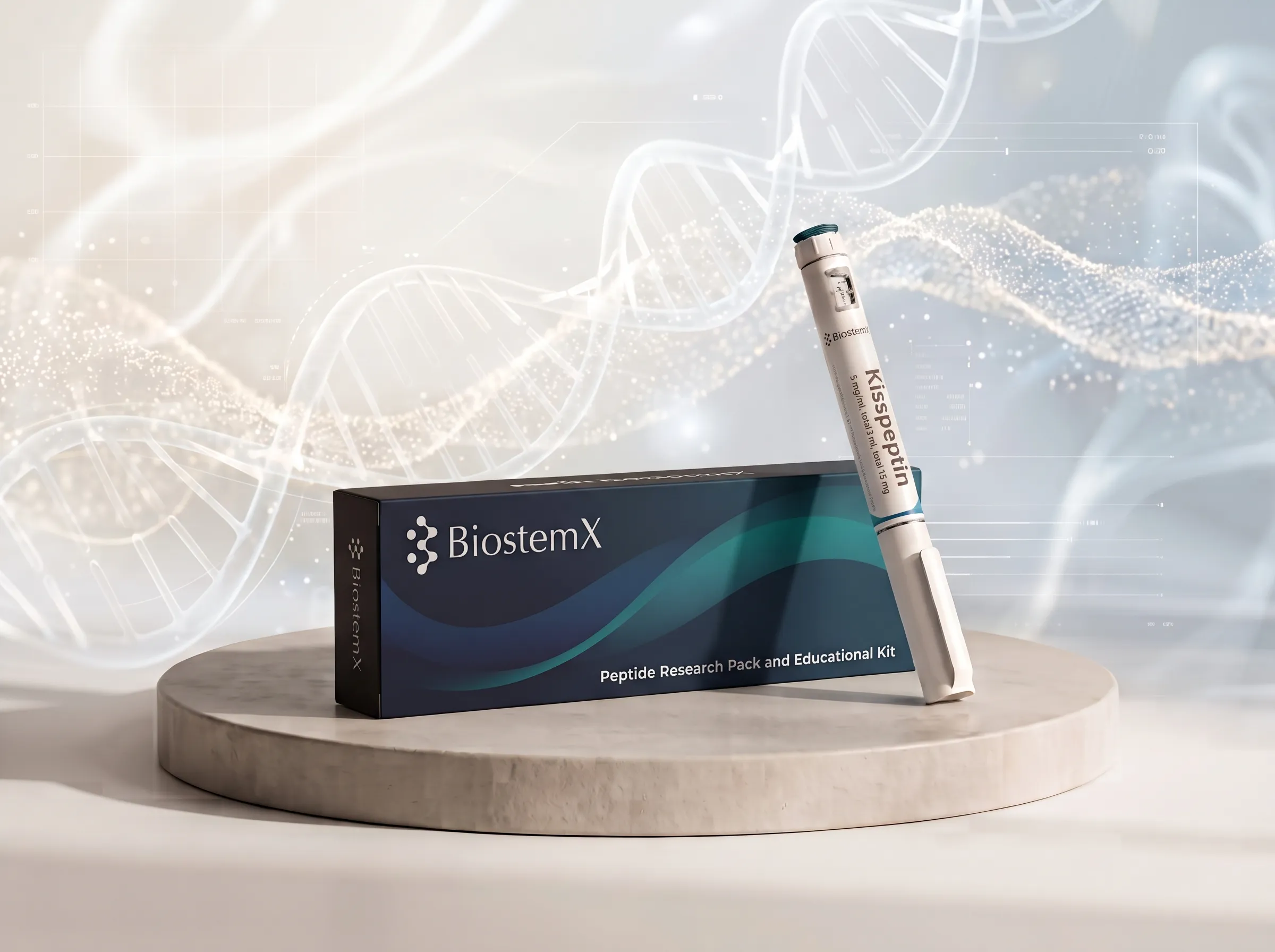
• Natural and physiological stimulation of GnRH release: Activates KNDy neurons
in the hypothalamus to trigger pulsatile GnRH secretion in a manner that mimics the
body’s natural pattern, without significant receptor desensitisation in the short
term.
• Regulation of the reproductive axis without suppression: Unlike exogenous
testosterone and anabolic steroids, Kisspeptin stimulates the HPG axis without
suppressing it, preserving fertility and natural reproductive function.
• Increased libido and sexual function: Through stimulation of the HPG axis and
increase in endogenous testosterone and gonadotropin production, improves
sexual desire and reproductive function in both sexes.
• Support in post-suppression HPG axis restoration: Particularly indicated for the
restoration of hormonal function after cycles of suppression with exogenous
testosterone or anabolic steroids, where physiological axis stimulation is
compromised.
• Potential in functional infertility treatment: Clinical studies document its efficacy
in hypogonadotropic hypogonadism and functional infertility in both males and
females, where the problem lies in hypothalamic or pituitary signalling rather than
the gonads themselves.
• Support in athletes with RED-S syndrome: Kisspeptin production is suppressible
by caloric restriction, overtraining, and chronic stress. Its use is of particular interest
in athletes with Relative Energy Deficiency in Sport (RED-S) syndrome, where HPG
axis suppression produces amenorrhoea, testosterone decline, and bone health
compromise.
• No need for compensatory drugs: Unlike exogenous testosterone therapy, which
often requires aromatase inhibitors to avoid oestrogenic imbalances, Kisspeptin
stimulates the axis in a self-regulated manner, reducing the need for additional
compensatory drugs.
• Metabolic and environmental sensor: Integrates signals on the energetic,
hormonal, and inflammatory state of the body, making it a valuable biological
indicator of the overall health of the reproductive neuroendocrine axis.