Oxytocin spray

100 I.U./10ml

A naturally occurring neuropeptide hormone involved in social cognition, emotional
processing, bonding and interpersonal behaviour, extensively studied through intranasal
administration in human neuroscience research.

151 $

About

Oxytocin is a naturally occurring peptide hormone synthesised in the hypothalamus and
released through the posterior pituitary. It has important physiological roles in reproduction
and lactation but also functions as a neuromodulator involved in social cognition,
emotional processing, attachment and interpersonal behaviour.
For this reason, oxytocin is sometimes referred to as the “bonding hormone”, although its
neurological effects are considerably more complex and depend on the individual and the
social context.
Intranasal oxytocin has become one of the most extensively studied approaches in social
neuroscience. Research demonstrates that intranasal administration can influence neural
circuits involved in social and emotional processing, including the amygdala and broader
limbic networks. Evidence supports both nose-to-brain and peripheral mechanisms, and
the relative contribution of each pathway remains under investigation.
Research has explored intranasal oxytocin in relation to social cognition, emotional
recognition, anxiety, trust, interpersonal interaction and behavioural regulation. Effects are
context-dependent and can differ significantly between individuals.

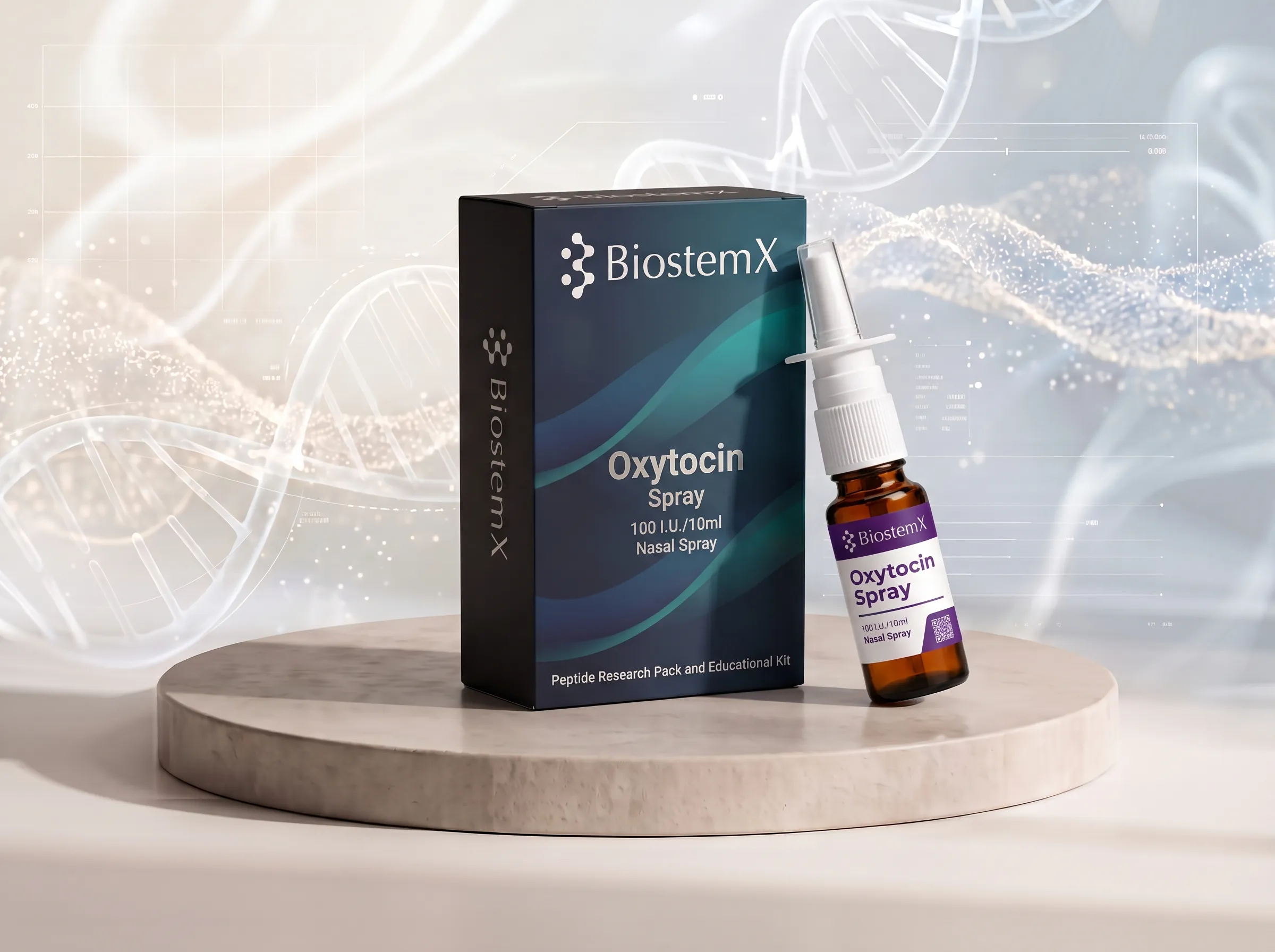
Administration and Dosage

• Concentration: 100 IU / 10 ml
• Total volume: 10 ml
• Form: Nasal spray
• Approximately: 85 sprays per vial
• Approximately: 1.18 IU oxytocin per spray
Timing and frequency should be determined according to the intended protocol.
Store refrigerated between 2°C and 8°C. Protect from direct sunlight, moisture and heat
sources. Do not freeze. After opening, keep the product tightly closed.

Clinical Trials and Results

Intranasal oxytocin is one of the most extensively investigated neuropeptides in human
social neuroscience.
Hundreds of studies have examined its effects on social cognition, emotional recognition,
anxiety, trust, attachment and neural responses to social stimuli.
Results vary significantly depending on dose, sex, psychological characteristics and social
context, meaning oxytocin should not simply be considered a universal “pro-social”
hormone. More recent research increasingly emphasises this context-dependent nature of
its neurological effects.

Possible Side Effects

• Mild headache
• Mild nasal irritation or congestion
• Temporary facial flushing
• Individual changes in emotional or social responsiveness
Intranasal oxytocin has generally been well tolerated in controlled human research,
although responses can vary substantially between individuals

Peptide Combinations

• PT-141: A complementary combination in sexual and relational health. PT-141 acts
primarily through melanocortin signalling involved in sexual desire, while oxytocin
acts on neuroendocrine systems involved in bonding, emotional processing and
attachment.
• Selank: Potentially complementary in emotional regulation. Selank focuses
primarily on anxiety and stress-related neurochemical pathways, while oxytocin
acts on social and emotional processing.

Benefits

• Support for social bonding and interpersonal connection: Oxytocin participates
in the neural systems involved in attachment, affiliation and social interaction.
• Social and emotional processing: Human research has demonstrated modulation
of brain networks involved in the interpretation of social and emotional information.
• Potential reduction of social anxiety and threat response: Intranasal oxytocin has
been studied for its ability to alter amygdala responses and the processing of
socially threatening stimuli.
• Emotional communication: Research has explored potential effects on emotional
recognition, empathy and interpretation of facial and social cues.
• Stress and autonomic regulation: Oxytocin interacts with neural systems involved
in stress and autonomic regulation and may influence physiological responses to
certain social situations.
• Sexual and relational health: Oxytocin also participates naturally in sexual
behaviour, bonding and post-contact affiliative responses.

Scroll to Top
✓ Item added to your cart!
View Cart Checkout