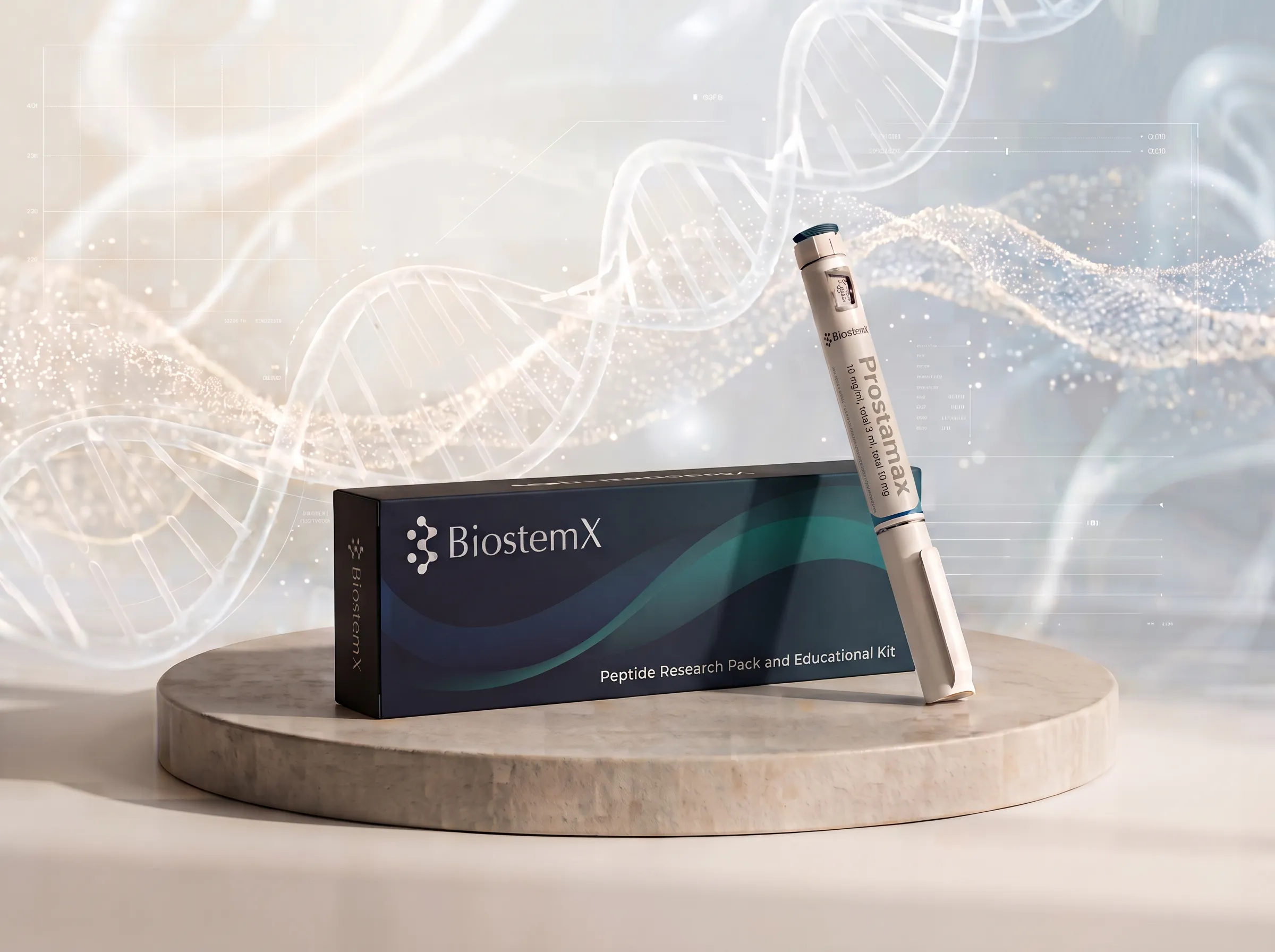
What is Prostamax?
Prostamax is an organ-specific peptide bioregulator developed by the Russian scientific
school of Prof. Vladimir Khavinson, composed of a tetrapeptide sequence of four amino
acids: Lysine (Lys), Glutamic Acid (Glu), Aspartic Acid (Asp), and Proline (Pro). Like all
Khavinson bioregulators, it acts selectively on the target tissue — in this case the prostatic
glandular tissue — modulating gene expression at an organ-specific level and promoting
regeneration and functional rebalancing of the prostate gland.
The mechanism of action of Prostamax is based on the tetrapeptide’s ability to interact
directly with the DNA of prostatic cells, regulating the expression of genes involved in the
reduction of chronic inflammation, the regulation of cell proliferation, and restoration of
normal glandular function. This bioregulatory approach produces gradual but profound and
lasting effects on prostatic tissue, without interfering with other physiological axes.
Prostamax is particularly indicated in the management of benign prostatic hyperplasia
(BPH), reduction of chronic prostatic inflammation, and support of urinary function. The
classic Khavinson protocol involves short cycles of 10 to 20 days repeatable two to three
times per year, with regular PSA monitoring.